
A recent visit to Kinkaku-ji reminded me that a good tour is not only about what you see — but when you see it.
Japan has been experiencing serious overtourism in recent years, and Kyoto is probably one of the best-known examples.
Famous places such as Kinkaku-ji, Kiyomizu-dera, and Fushimi Inari can become extremely crowded. For travelers who have only one or two days in Kyoto, spending a long time standing in lines or moving through crowds can take away a large part of their limited sightseeing time.
I have guided around 400 tours in Japan, mostly for international visitors. Over the years, I have learned that when visiting popular places, timing can be just as important as the place itself.
A recent tour in Kyoto reminded me of this again.
We Arrived at Kinkaku-ji at 4:30 p.m.
I was guiding American guests in Kyoto, and because of several circumstances during the day, we arrived at Kinkaku-ji much later than originally planned.
It was around 4:30 p.m.
This was very close to closing time.
Many temples and sightseeing facilities in Japan close surprisingly early, often around 5 p.m. Opening hours and final admission times vary by place and season, so this is something travelers should always check carefully.
Normally, Kinkaku-ji is one of Kyoto’s busiest attractions.
But when we arrived that afternoon, something was very different.
There was almost no waiting.
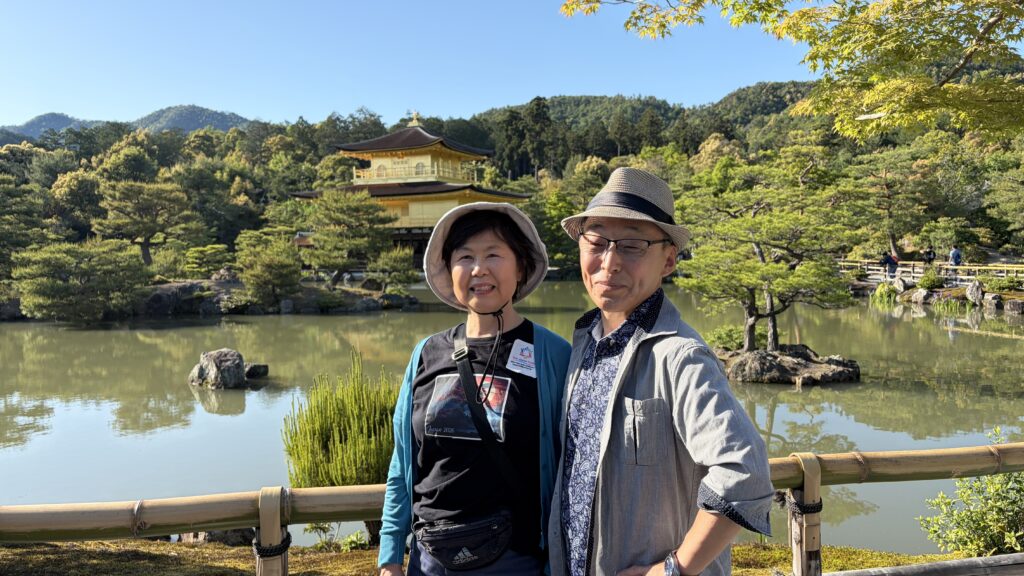
We entered quickly and walked to the famous viewpoint overlooking the pond.
And there it was — the Golden Pavilion, beautifully illuminated by the late-afternoon sunlight.
Because there were fewer people, my guests could enjoy the view without feeling rushed. We could take our time taking photographs, and the atmosphere was much more peaceful than I had expected.
Sometimes arriving late is not a problem.
Sometimes it is an advantage.
Early Morning or Late Afternoon?
This experience illustrates one of the simple techniques I often use when planning an itinerary.
For extremely popular places, I try to visit either:
early in the morning, or near the end of the opening hours.
Of course, this does not work everywhere, and you must carefully check the opening hours and last admission time.
But the basic idea is simple.
If thousands of tourists want to visit the same famous places during the middle of the day, sometimes the best solution is not to avoid those places.
Change the time you visit them.
This sounds obvious, but many first-time visitors to Japan don’t think about it when making their itinerary.
In Kyoto, “When” Can Be as Important as “Where”
Most international travelers I meet do not have a week to explore Kyoto.
Often they have only one, two, or perhaps three days.
Naturally, they want to see the famous places they have dreamed about before coming to Japan.
I understand that completely.
But with such limited time, a good itinerary is not simply a list of famous attractions.
You have to think about what time to visit each place, how to move between them, where the crowds will be, where to eat, and how much time you are likely to lose waiting.
Saving 30 minutes here and another 30 minutes there can make a surprisingly large difference during a one-day tour.
This is something I have come to appreciate more and more after guiding hundreds of tours.
What Is the Real Value of a Tour Guide?
When people think about hiring a tour guide, they may first imagine someone explaining history.
Who built this temple?
When was this shrine established?
What does this statue mean?
Of course, these explanations are part of our job.
But after guiding so many international guests, I have come to believe that the most valuable part of a good private guide is often something else.
It is knowing how to make the guest’s limited time in Japan work better.
A good guide should know when a famous attraction is likely to be crowded.
A guide should be able to change the itinerary when traffic, weather, or crowds make the original plan inefficient.
Sometimes the important decision is to skip one place and spend more time somewhere else.
Sometimes it is finding a good restaurant along the route instead of spending an hour traveling to a famous restaurant.
And sometimes, as happened at Kinkaku-ji, it is simply arriving at the right time.
These small decisions may not appear in a guidebook.
But during an actual trip, they can make a big difference.
A Good Tour Is Not Just About Information
I enjoy explaining Japanese history and culture to my guests.
But I don’t think a tour guide should simply be a walking history book.
Travelers can find enormous amounts of historical information online today.
What they cannot easily find online is someone standing beside them who understands the situation at that particular moment.
Is this line worth waiting for?
Should we go somewhere else first?
Where can we have a good lunch nearby?
Are the guests getting tired?
Should we change the plan?
These are practical questions, but I think they are at the heart of a good private tour.
My visit to Kinkaku-ji that afternoon was a small example.
We arrived at what seemed like an inconvenient time.
Instead, we found almost no line, beautiful late-afternoon light, and enough space to enjoy one of Kyoto’s most famous sights.
After around 400 tours, I still learn something from almost every tour.
And sometimes the simplest lesson is the most useful:
In Japan’s most popular destinations, don’t just think about where you want to go. Think carefully about when you go.